


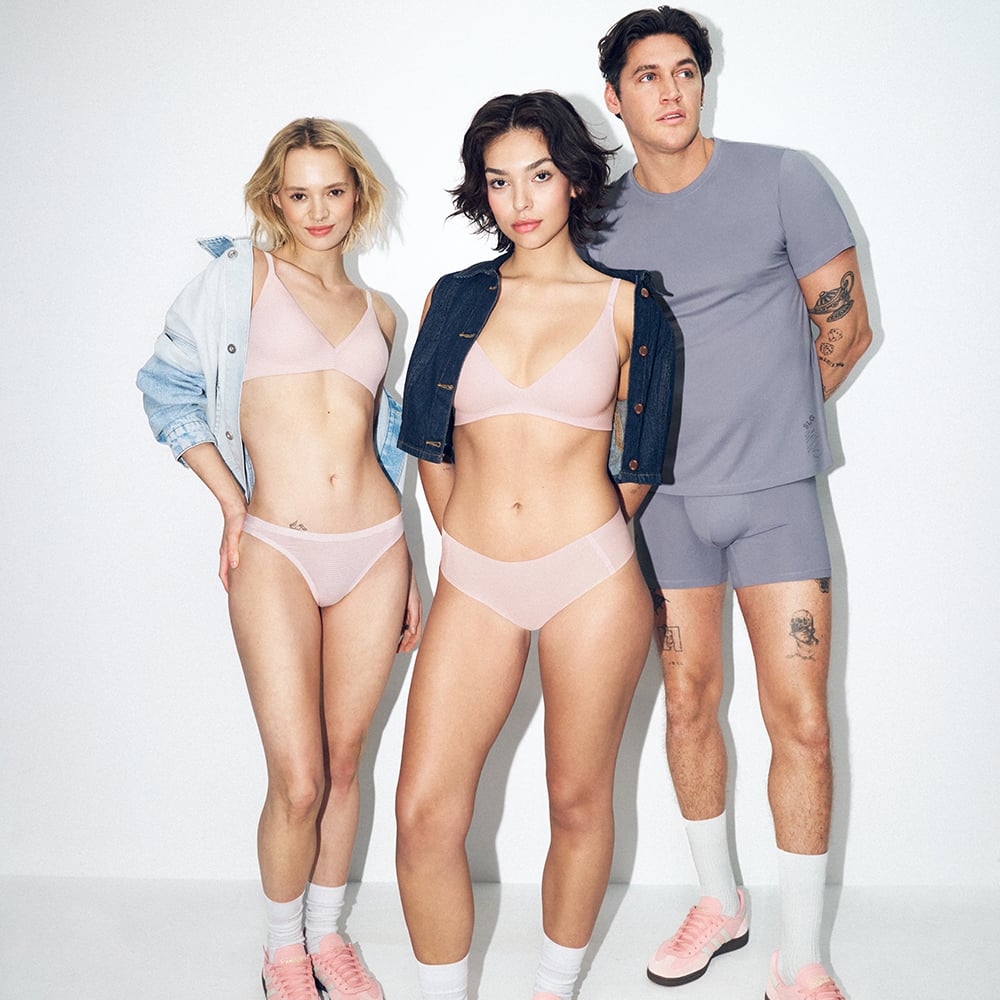

VPL: what it means and how to avoid it
VPL: what it means and how to avoid it
TL;DR: VPL stands for visible panty line, the ridge that shows through fitted clothing. It comes from the edge of the knicker, not from the knicker itself, so the fix is an edge that lies flat: laser-cut, bonded or knitted into the fabric. Size up rather than down, and under white or light colours wear a shade close to your skin tone, never white.
Table of contents
- 1.What does VPL mean?
- 2.Why the line appears
- 3.Seamless, bonded or laser-cut?
- 4.Which cut under which garment
- 5.The colour rule for white
- 6.Four mistakes that make it worse
- 7.Frequently asked questions
Almost everyone solves this problem the wrong way round. The instinct is to buy smaller knickers so there is less fabric to show. Smaller is exactly what creates the line: less fabric under more tension digs into soft tissue, and the dent it leaves is what the trousers reveal.
The line has nothing to do with how much you are wearing. It comes from one place, the edge, and once you know that the fix becomes simple.
What does VPL mean?
VPL stands for visible panty line: the outline of your underwear showing through the clothes you have on top. It is most obvious on fitted trousers, jersey skirts and anything in a light colour, because those fabrics follow every change in thickness underneath.
The term dates from the 1970s, when trousers got closer to the body and the problem became common enough to need a name. It has stayed in use because the problem has not gone anywhere.
Why the line appears
Fabric shows what sits underneath it in two ways: by thickness and by tension. A folded hem with elastic inside is three or four layers thick where the rest of the knicker is one, and that step is what you see. Add elastic that grips tightly and you also get a small dent in the skin, which prints through even after you take the garment off.
So a knicker becomes invisible when its edge stops being a step. There are three ways to achieve that, and they are the only three that work.
Seamless, bonded or laser-cut?
The three terms get used as if they meant the same thing. They describe different constructions, and they behave differently in wear.
What each one actually is:Construction How the edge is finished Best for Laser-cut Cut and sealed, no hem at all The flattest finish, ideal under jersey Bonded Glued rather than stitched Flat edge with more hold than laser-cut Seamless knit Knitted in one piece, edge built in All-day comfort, no side seams either Microfibre with folded hem Stitched hem, thin fabric Better than cotton, still shows a faint line
Triumph builds this into the Smart Invisible line, where the edges are cut and sealed rather than hemmed, and into Sense of Modal for a softer hand. The full range sits under seamless lingerie.
Which cut under which garment
The rule that solves most cases: the edge of the knicker should sit where the garment is loosest, or not sit anywhere the garment is tight. A thong removes the leg line entirely but adds a waistband; a full brief has a waistband above the hip where trousers rarely cling.
- Fitted trousers and jeans: laser-cut hipster or thong, both edges fall outside the tightest zone
- Jersey skirt or dress: thong or seamless short, since jersey shows even a flat hem
- Tailored trousers: seamless brief, the waistband hides under the trouser waist
- White or cream trousers: laser-cut in a skin tone, see the next section
- Loose linen: anything you like, the fabric never touches long enough to show
The colour rule for white
Under white trousers, white underwear is the most visible thing you can wear. It sounds wrong and it catches almost everyone.
The reason is contrast against skin, not against the garment. White fabric over skin lets some light through; where the white knicker sits, light stops, and the eye reads a bright patch against the darker skin around it. A shade close to your own skin tone reflects roughly the same amount of light as the skin next to it, so there is nothing for the eye to catch.
Match the tone to your skin rather than to the garment, and the same logic applies under cream, pale pink and light grey.
Four mistakes that make it worse
- Sizing down. Less fabric under more tension cuts in and leaves a dent. If you are between sizes on a seamless cut, take the larger one.
- Choosing cotton for fitted clothes. Cotton is the right choice for comfort and breathability, but it is thicker and its hems are usually folded. Keep it for looser days, and see our guide to cotton.
- Blaming the knicker instead of the trousers. Some fabrics show everything. A thin viscose blend with no structure will print a laser-cut edge that jeans would hide completely.
- Ignoring the bra. The same physics applies at the back: a hooked band under a fine knit shows the same way. A moulded T-shirt bra solves the top half.
Frequently asked questions
Visible panty line: the outline of underwear showing through clothes. The term came into use in the 1970s, when closer-fitting trousers made it a common problem. Anything with an edge that lies flat: laser-cut, bonded, or knitted in one piece. The construction matters more than the cut, so a laser-cut brief can be less visible than a thong with a thick hem. They remove the leg line but keep a waistband, which can show under low-rise trousers. Under jersey a seamless thong works well; under thin fitted trousers a laser-cut hipster is often the safer choice. A shade close to your own skin tone. White underwear under white fabric reads as a bright patch against the skin around it, which is exactly what you are trying to avoid. Yes, with the right care. Bonded and laser-cut edges dislike heat, so wash cool and skip the tumble dryer; heat is what makes a sealed edge start to lift at the corners.What does VPL stand for?
What underwear has no VPL?
Do thongs always avoid VPL?
What colour underwear goes under white trousers?
Does seamless underwear last as long?
For over 140 years, Triumph has been creating products designed to inspire beautiful feelings. Rooted in femininity, shaped by thoughtful design and worn with modernity, our lingerie helps every woman feel at home in herself. We believe true beauty is a feeling that comes from being in harmony with your body and confident in your own femininity. At Triumph, we create the conditions for beautiful feelings to bloom. Because the greatest beauty is already hers. We simply help her feel it.
For over 140 years, Triumph has been creating products designed to inspire beautiful feelings. Rooted in femininity, shaped by thoughtful design and worn with modernity, our lingerie helps every woman feel at home in herself. We believe true beauty is a feeling that comes from being in harmony with your body and confident in your own femininity. At Triumph, we create the conditions for beautiful feelings to bloom. Because the greatest beauty is already hers. We simply help her feel it.
